Mastering Bankroll Management: The Key to Long-Term Betting Success
Why Bankroll Management Matters
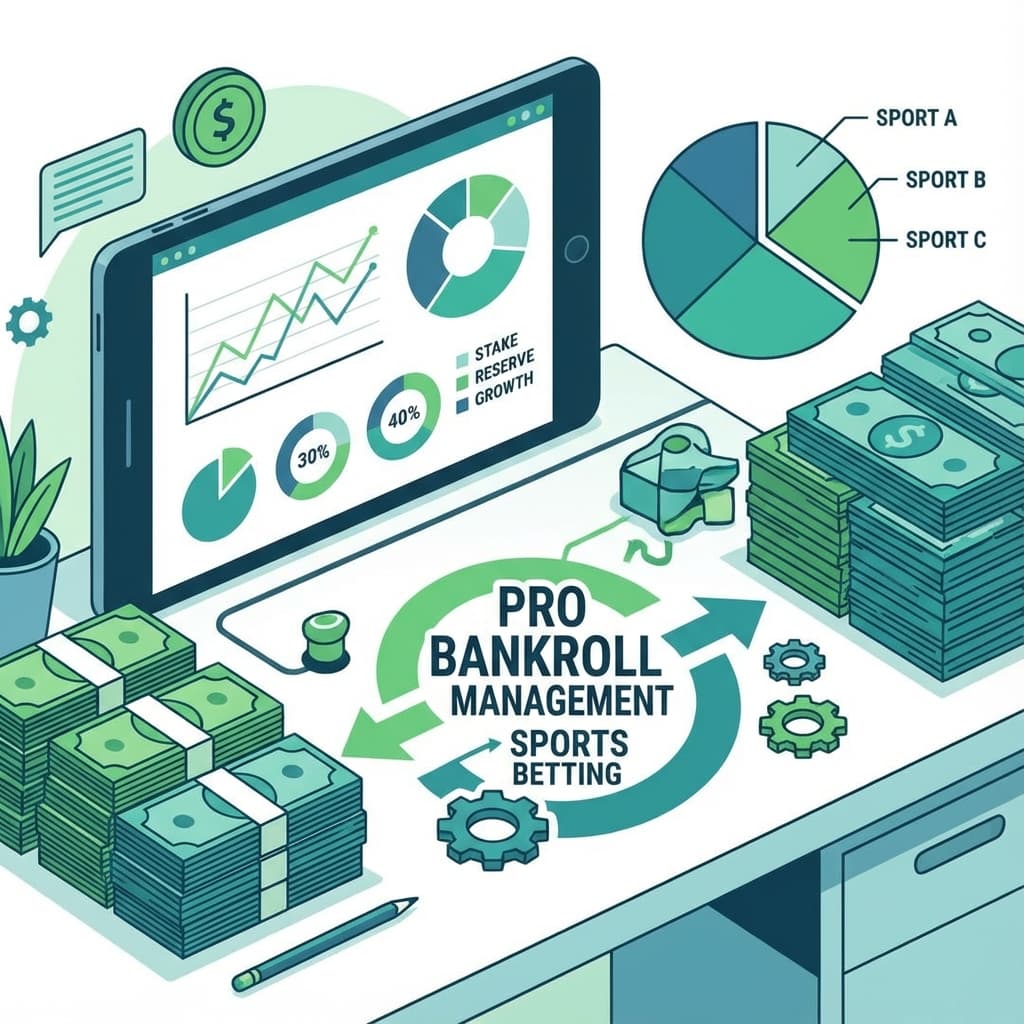
Bankroll management is arguably the most important skill a sports bettor can develop. Without proper money management, even the most skilled handicapper will eventually go broke. This guide will teach you proven strategies used by professional bettors to protect and grow their bankrolls.
What is a Bankroll?
Your bankroll is the total amount of money you've set aside specifically for betting. This should be money you can afford to lose – never bet with rent money, savings, or funds needed for essential expenses.
The Fundamentals of Bankroll Management
1. Define Your Bankroll
Before placing any bets, determine your total bankroll. This is your starting point and the foundation of all your betting decisions. Be honest with yourself about what you can truly afford.
2. Unit Sizing
A "unit" is your standard bet size. Most professional bettors recommend betting 1-5% of your bankroll per wager:
- Conservative (1-2%): Best for beginners and risk-averse bettors
- Moderate (2-3%): Standard approach for experienced bettors
- Aggressive (3-5%): Only for highly confident plays with proven edges
Popular Bankroll Strategies
Flat Betting
The simplest and most recommended approach for beginners. You bet the same amount (1 unit) on every wager regardless of confidence level.
Pros: Easy to track, limits variance, protects against losing streaks
Cons: May feel restrictive, doesn't capitalize on high-confidence plays
Percentage Betting
Bet a fixed percentage of your current bankroll. As your bankroll grows, so do your bets; as it shrinks, bets decrease automatically.
Example: With a €1,000 bankroll betting 2%, your first bet is €20. If you win and grow to €1,050, your next bet becomes €21.
Kelly Criterion
A mathematical formula that determines optimal bet size based on your perceived edge:
Stake % = (bp - q) / b
Where: b = decimal odds - 1, p = probability of winning, q = probability of losing (1-p)
Note: Many professionals use "fractional Kelly" (1/4 or 1/2) to reduce variance.
Protecting Your Bankroll
Set Loss Limits
Establish daily, weekly, and monthly loss limits. When you hit these limits, stop betting. This prevents emotional decisions and catastrophic losses.
- Daily limit: 5-10% of bankroll
- Weekly limit: 15-20% of bankroll
- Monthly limit: 30-40% of bankroll
Avoid Chasing Losses
One of the biggest mistakes bettors make is increasing bet sizes after losses to "get back to even." This is a recipe for disaster. Stick to your unit size regardless of recent results.
Track Everything
Keep detailed records of every bet:
- Date and time
- Sport and league
- Bet type and selection
- Odds and stake
- Result and profit/loss
When to Adjust Your Bankroll
Review your bankroll periodically:
- Growing bankroll: Consider increasing unit size after sustained success (e.g., 50% bankroll growth)
- Declining bankroll: Reduce unit size if you drop below 75% of your starting bankroll
- Adding funds: Only add to your bankroll after careful consideration, never impulsively after losses
The Psychology of Bankroll Management
Good bankroll management isn't just about numbers – it's about discipline and emotional control:
- Accept that losing streaks are inevitable
- Don't let wins make you overconfident
- View betting as a long-term investment, not a get-rich-quick scheme
- Take breaks when emotions run high
Conclusion
Bankroll management separates professional bettors from recreational gamblers. By treating your betting as a business, setting clear rules, and sticking to them, you give yourself the best chance of long-term success. Remember: it's not about winning big on one bet – it's about consistent, sustainable growth over time.